Flat lay product photos without a studio: the POD seller's guide
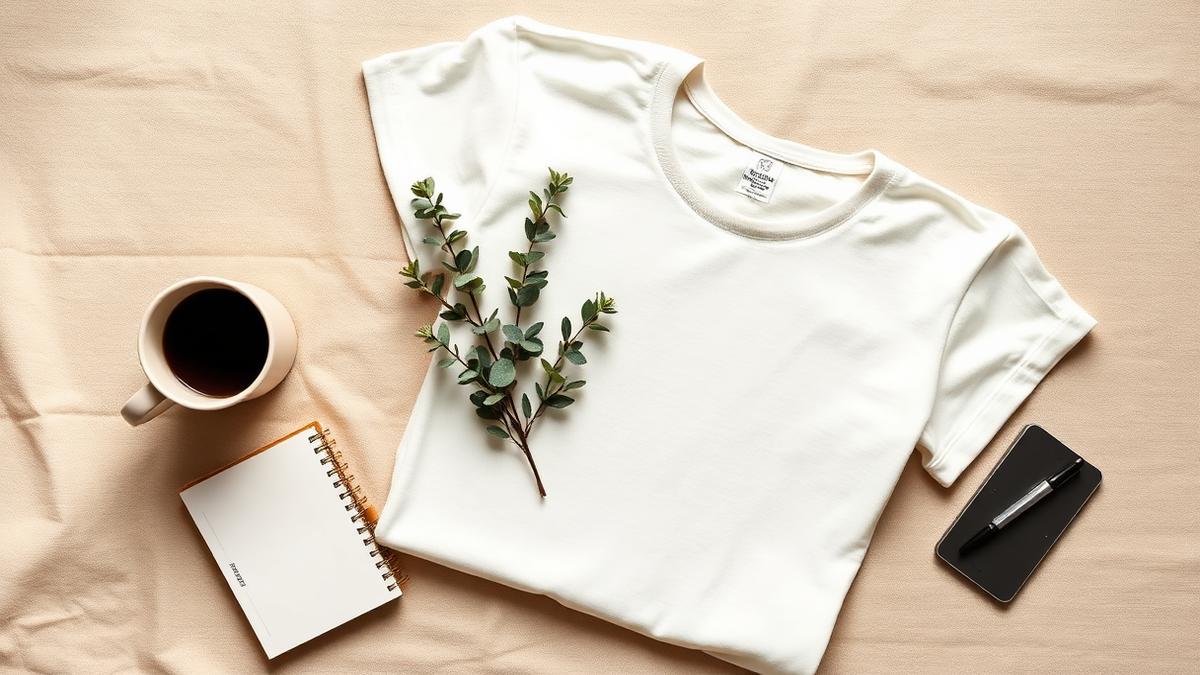
The short answer: a flat lay is a photo taken from directly above of a product laid out flat, usually on a styled surface with a few props. In apparel it is one of the best-performing listing image styles because it shows the whole garment and the design clearly while feeling editorial rather than catalogue-flat. You do not need a camera, rig, or studio: starting from a product mockup, a flat lay generator builds the styled top-down scene around your product in seconds, and your design stays untouched.
Scroll any successful apparel shop on Etsy and you will see the pattern: the listings that feel premium are rarely plain white-background renders. They are styled scenes, and the flat lay is the workhorse of those scenes, easy to read as a thumbnail, honest about the product, and warm enough to feel like a brand rather than a factory.
What makes a flat lay work
A good flat lay does three jobs at once:
- Shows the product honestly. Top-down, laid flat, the full garment and print visible, no distortion. Buyers can judge the design, the placement, and the proportions in one look.
- Sets a mood. The surface and props (wood, linen, a sprig of eucalyptus, a mug of coffee) tell the buyer who this product is for before they read a word.
- Survives the thumbnail. Flat lays read clearly even at small search-result sizes, where lifestyle photos with models often turn to noise.
The classic flat lay mistakes
- Prop overload. The product is the hero. If a prop touches or overlaps the print, it is stealing the sale.
- Inconsistent style across a shop. Ten listings with ten different surfaces feel like a flea market. One consistent flat lay style makes a shop feel like a brand.
- Wrinkles. A wrinkled shirt in a flat lay reads as "arrives wrinkled." (If your source photo has this problem, our free Shirt De-wrinkle tool fixes it.)
- Shadows that fight the light. In a composed flat lay, mismatched shadow directions between product and props are what makes an image feel fake. Generated scenes handle this consistently.
Flat lay vs on-model vs plain mockup: when to use which
| Image style | Best for | Watch out |
|---|---|---|
| Flat lay | Hero or secondary image, design-forward products, cohesive shop feel | Keep props minimal so the print stays the hero |
| On-model | Showing fit and drape, lifestyle brands | Weaker at thumbnail size, model distracts from the design |
| Plain mockup on white | Amazon main image (required), clean catalogue looks | Feels generic as an Etsy hero image |
The strong listing uses several: a flat lay or styled hero, a plain render for clarity, a detail crop, and a colour range image (see our colour variants guide).
How to make a flat lay without a camera
The traditional route is a tripod arm, diffused daylight, a styled surface, and an afternoon per batch. The generated route:
- Start from your product image, a clean mockup render works perfectly.
- Generate the scene. The tool builds the top-down surface, props, and lighting around your product. Your design and product stay exactly as uploaded, only the scene is generated.
- Download and list. Same style, repeatable across your whole collection in minutes.
Our free Flat Lay Generator does exactly this from any product image, and the mockup library supplies the clean garment render to start from if you only have the design.
Keeping a consistent style across your shop
Pick one flat lay recipe, surface, palette, prop family, and reuse it for every listing. Consistency compounds: the shop page starts to look curated, repeat visitors recognise your look in search results, and new listings inherit trust from old ones. With generated flat lays this is trivial, since the same scene style can be applied to every product in a collection.
Frequently asked questions
What is a flat lay photo? A photo taken from directly above of a product laid out flat, usually styled with a surface and a few props. It is a staple of apparel and print on demand listings because it shows the full product clearly while feeling editorial.
Do flat lays work as the first listing image? On Etsy and Shopify, yes, a styled flat lay makes a strong hero image. On Amazon the main image must be on pure white, so use the flat lay in the secondary slots there.
Can I make a flat lay without photographing my product? Yes. Start from a mockup render and generate the styled top-down scene around it. The product and design stay exactly as uploaded, only the scene is generated.
What props should I use in a flat lay? Few, and none touching the print. Props should hint at the audience (coffee and a notebook for a desk-humour tee, eucalyptus and linen for a minimal brand) while the product stays the unmistakable hero.